
Theatre Without Thinking: Report on a Workshop Held at Sapperlot 2026
Authors: Miro Jerohin & Tomi Korhonen (Playmissionaries, directors & theatre educators from Finland)
Date of publication: 04/10/2026
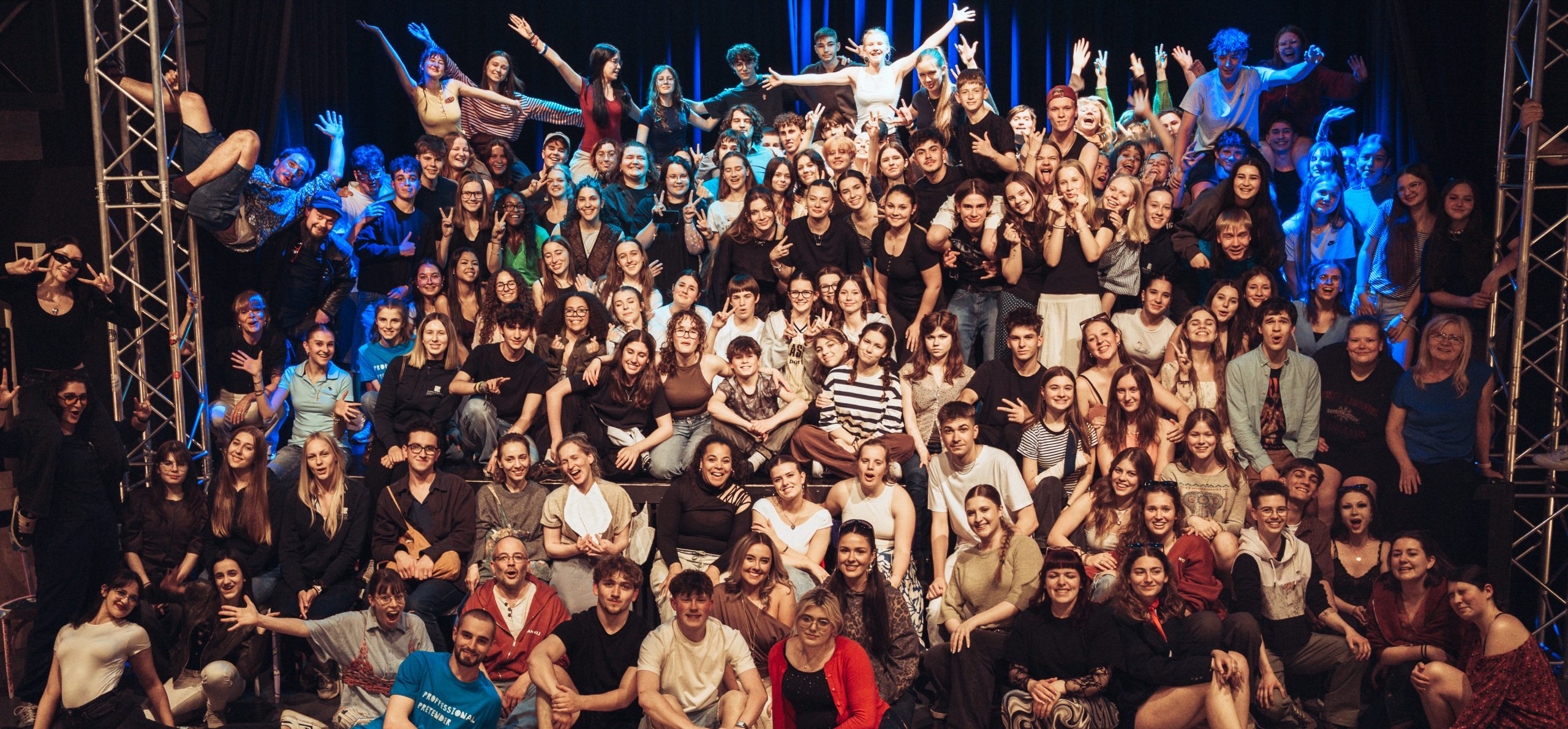
During the youth theatre festival Sapperlot in May 2026, we had the opportunity to give a workshop. And it went something like this:
- Should we?
- Yeah we should!
- What should we do?
- I guess we should do the things we always do.
- What should we call the workshop?
- Aaaah…
- ööööhhh…..
- It’s always so hard to think of a good name.
- Should we just call it: Theatre without thinking.
- Yeah we should, AND should we go for a beer and plan the workshop
- We should!
In this article we will try to open up what we did, how we did it and why we did it.

WHAT?
We wanted the participants within a very short amount of time to create a short scene that had to include a whole bunch of stuff. 27 things, actually. These things:
- 20 sec of laughter
- a classical painting
- a stuffy nose
- a disaster
- a surprising entrance
- 30 sec of dancing
- a very slow sortie
- 30 sec of singing
- a birth
- two birds
- one stone
- something greek
- misquoted line of Shakespeare
- 30 sec of synchronized movement
- 30 sec of stillness
- 15 sec of hypersonic talking
- a fart
- a purposeful handshake
- something hidden
- 5 ways to use the main character (it was an air-filled children’s toy animal)
- real pain
- 5 lines of poetry
- a ghost
- something horrifying
- a gesture repeated at least 10 times
- break the 4th wall
- analysis paralysis

WHY?
Why did we do all these things in this way? The short answer is that play is the core of theater – ground zero – without play there is no theatre. We wanted to work this way, fast and messily, as an attempt to get out of our headspace, to get out of a judgemental good-bad way of thinking and instead open ourselves up to a curious what-if and yes-and way of thinking. Theatre is at its best when everyone involved is playing together, when there is a sort of “dangerous lightness” to the whole affair.
But why call it theatre without thinking? Because when we think we are usually not really present – we are usually then somewhere in the past or the future, not in the now. While thinking we also usually (at least within the context of theatre) are then focused inwards instead of outwards. So while on stage we are in some way trapped within ourselves when we start to think too much – we start to expect things from reality instead of experiencing reality on reality’s own terms.
When our focus goes from thinking to experiencing, to opening our eyes and senses to what is happening around us then the spirit of play will start to manifest itself within us. We will start to react to what is happening around us, in a way dancing with the energy in the space, and in this state we will automatically co-create with the people we share the stage with. Instead of thinking about what we should do we are already acting! Something is already happening! Something more than any individual actor, something surprising, something magical. When we allow ourselves to surrender to the moment, to not try to control it, to allow curiosity and play to take the wheel, then we will not only surprise the audience but also surprise ourselves.

HOW?
We started off with three different chairgames to build trust, courage, awaken playfulness in the participants and to create an atmosphere of play in the workspace. These games worked as warmups and also divided the group into two smaller groups, for the main task. The task was to create a scene in 30 minutes with all the 27 different things listed above.
During the task there was no real possibility of saying no to any idea, because the time constraint didn’t allow it. The participants pitched ideas within their groups and went with more or less the first ideas from the get-go. There was a lot of shouting, laughter and movement and after about 25 minutes we asked them if they needed 3 extra minutes? They answered with a resounding YES. Wonderful BUT then you must also have a romantic kiss in the scene. With a frantic pace the two groups finished just in time for showtime.
We watched the two scenes and afterwards we gathered around for a reflection where we focused on things that we liked and found interesting, things that caught our attention or mesmerized us.
PARTING THOUGHTS
To paraphrase John Dewey in his book Art as Experience: art is not confined within the artwork, but emerges when the artwork and the person experiencing it meet.
Mircea Eliade, in his work the Myth of the Eternal Return, writes that there exists a profane time and a sacred time. Simply put, profane time is what we usually think of as time: a horizontal line that moves from the past to the future. Sacred time is the present, the eternal now, the vertical line where man is connected to the divine and sacred.
In the context of theatre, isn’t play sacred time? That we are not trapped within ourselves, regretting the past and worrying about the future, but that our focus is outward in the here and now – that we actually meet and connect with what is happening around us and in that meeting – in that moment of connection – something bubbles up – something living and new that we cannot know or control. Viewed from this lens play becomes a form of worship – a form of sacred action – and at that moment of play, art happens.
ps. Can you guess which Shakespeare line both groups misquoted? That’s right: To be or nuts to be, that is the question.